
Salomon de Bray's Jeune paysanne unveiled
Restorations sometimes hold surprises. The Jeune paysanne by Salomon de Bray, a masterpiece acquired in 1907 as a painting by Jacob Jordaens, revealed numerous repaints during its restoration by the Arcanesworkshop...
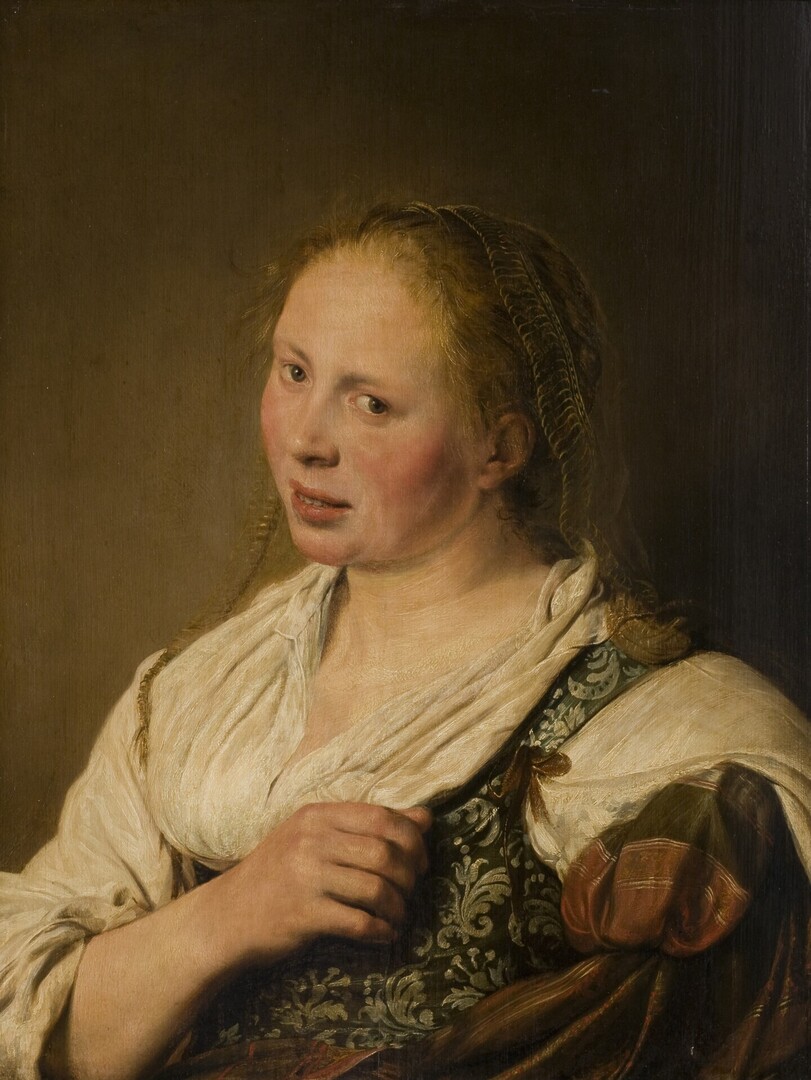
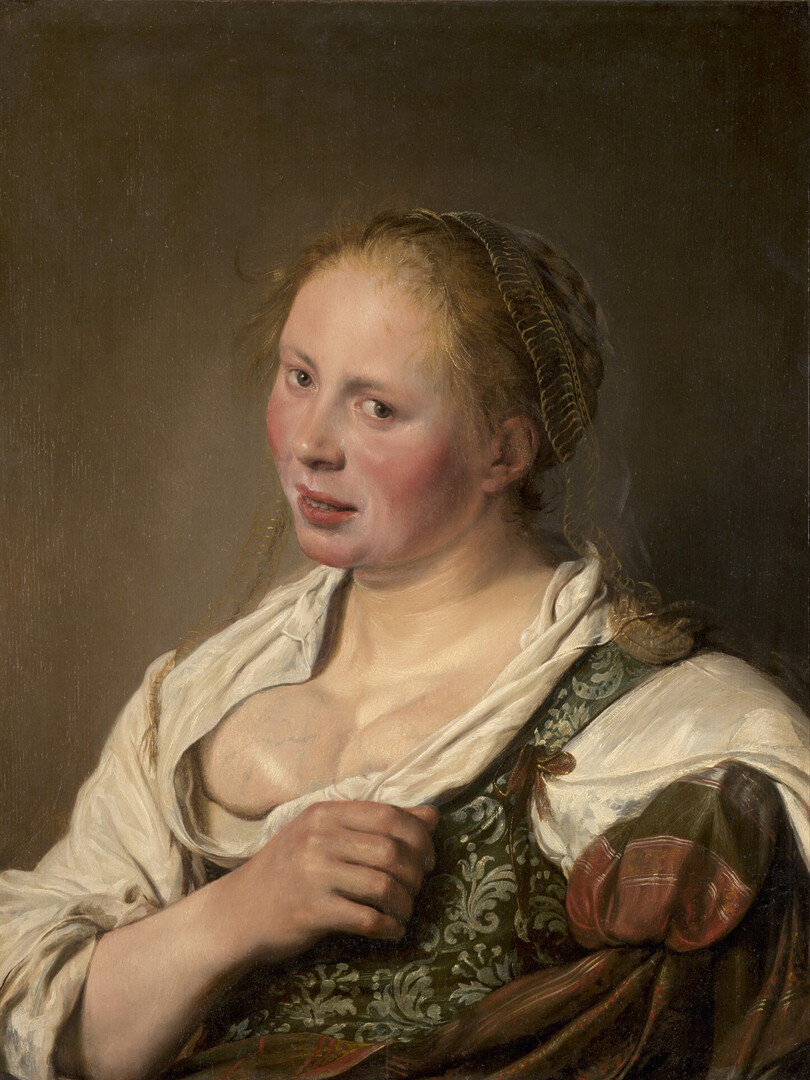
Salomon de Bray (Amsterdam, 1597 - Haarlem 1664), Jeune paysanne, c. 1635, oil on wood, 50.5 x 65.4 cm, inv. PE.1406.A. Purchased by the museum from the Bordeaux art dealer Madame Pillon on the advice of the donor Paul Fourché in 1907.
Museum of Fine ArtsA major acquisition
In 1907, Paul Fourché, a major donor to the museum, advised the Ville d'Orléans to acquire a painting of a young peasant girl, which he believed to be by the Flemish painter Jacob Jordaens. In reality, the painting sold by Mme Pillon, a Bordeaux art dealer, was by the painter Salomon de Bray, originally from Amsterdam, but who soon settled in Haarlem. A member of an important family of artists, Salomon de Bray was a fundamental artist of the first half of the 17th century, famous for his naturalistic reading of subjects, not hesitating to blur the line between genre scenes and allegorical or biblical subjects.
In 1932, the great historian and curator of the Musée du Louvre Charles Sterling recognized the Jeune paysanne in the Musée d'Orléans as being in the painter's hand. He emphasized "the dry, proud frankness with which this Dutchwoman is seen", and compared it to several of the painter's compositions dating from the second half of the 1630s.
A restoration to discover
The presence of a highly opaque and yellowed varnish led to its restoration in early 2025. Immediately, questions arose about the shirt worn by the young woman: the low-angled light clearly revealed a network of cracks in the blouse that differed from the rest of the painting.
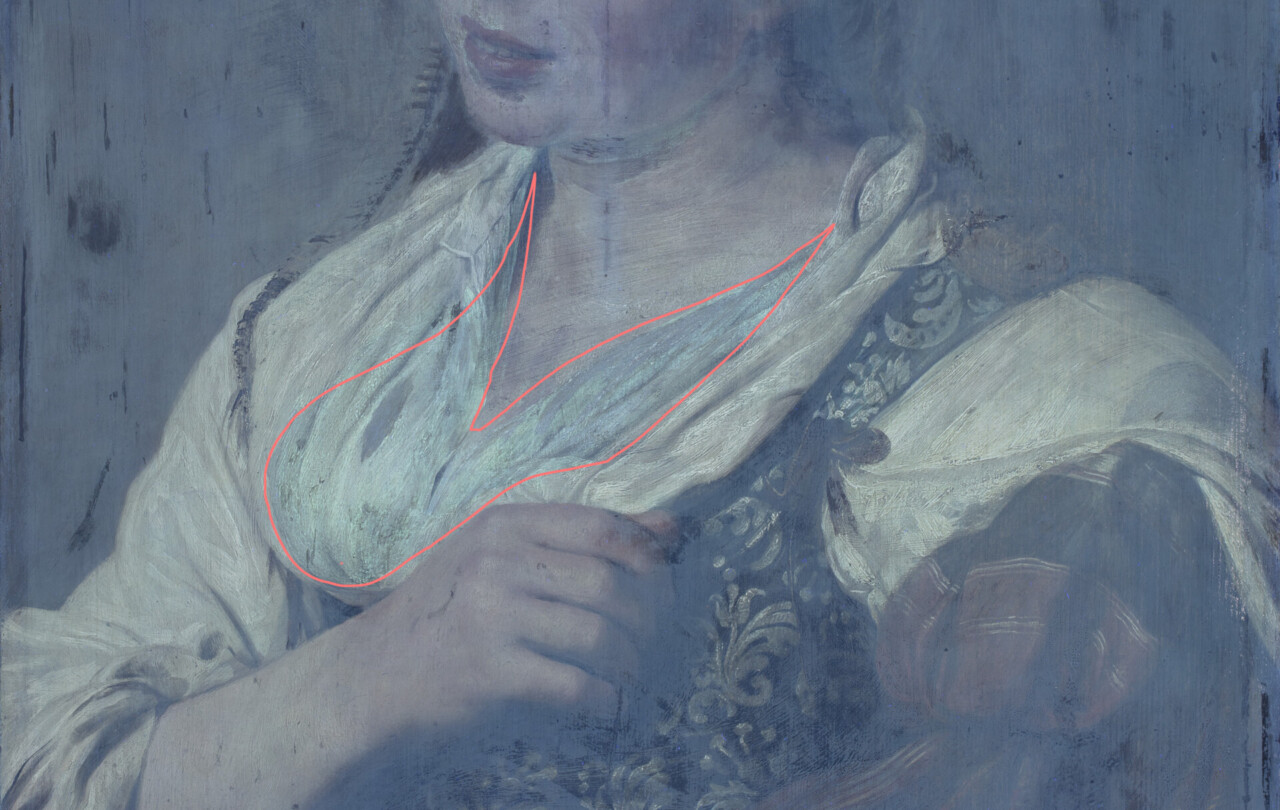
Ultraviolet (UV) photograph of the Orléans painting before restoration, highlighting the overpaint.
When photographed under UV light, the material in the same area reacted differently, and tests confirmed that the overpainting was not intended to conceal a deteriorated part of the composition. This means that, at some unknown date, the painting underwent a major overpainting for modesty's sake. The practice has been common over the centuries: what seemed acceptable at one time may no longer be acceptable at another. While extreme cases led to the destruction of works deemed immodest, a more moderate approach was to apply modesty repaints to camouflage the undressed parts.
A new topic?
Restoration not only alters the composition, it transforms the reading of the work and its subject. It's worth bearing in mind, however, that cleavage revealing ample bosom is in fact a common motif in Dutch painting.
The young woman's costume can be found in other paintings by Salomon de Bray. The green fabric with plant motifs is echoed in a Bergère from the Bristol Museum & Art Gallery, wearing a similar fabric but in red. The costume, however, is more reserved when it comes to the depth of the décolleté. On the other hand, the Orléans painting resonates with other contemporary compositions, such as the Bohemian Woman by Frans Hals in the Musée du Louvre, or with the body of work by Salomon de Bray, which itself includes several depictions of bare-breasted women. But these images of Dutch girls are not the only instances of de Bray's relatively pronounced cleavage. A painting based on the Book of Judges shows the main heroine's bosom just as frankly, if not more so.
Collection restoration program
The restoration of this painting is part of a larger project undertaken since 2016 to accompany the redeployment of the collections. In the space of almost ten years, several dozen paintings have lost their opaque varnish, had their overpainting removed, have been studied and have regained their often spectacular legibility.