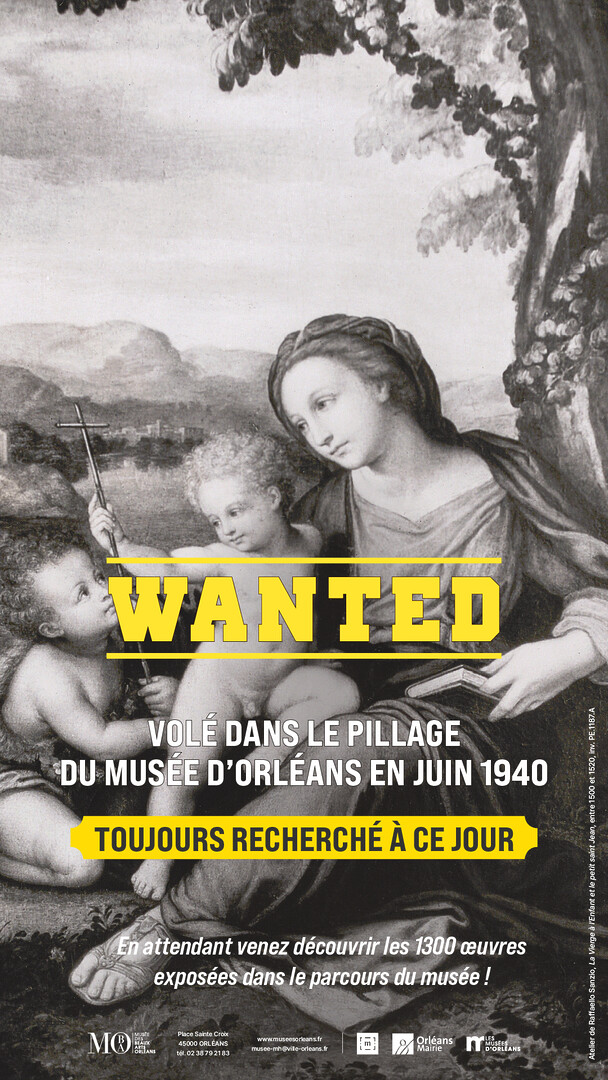
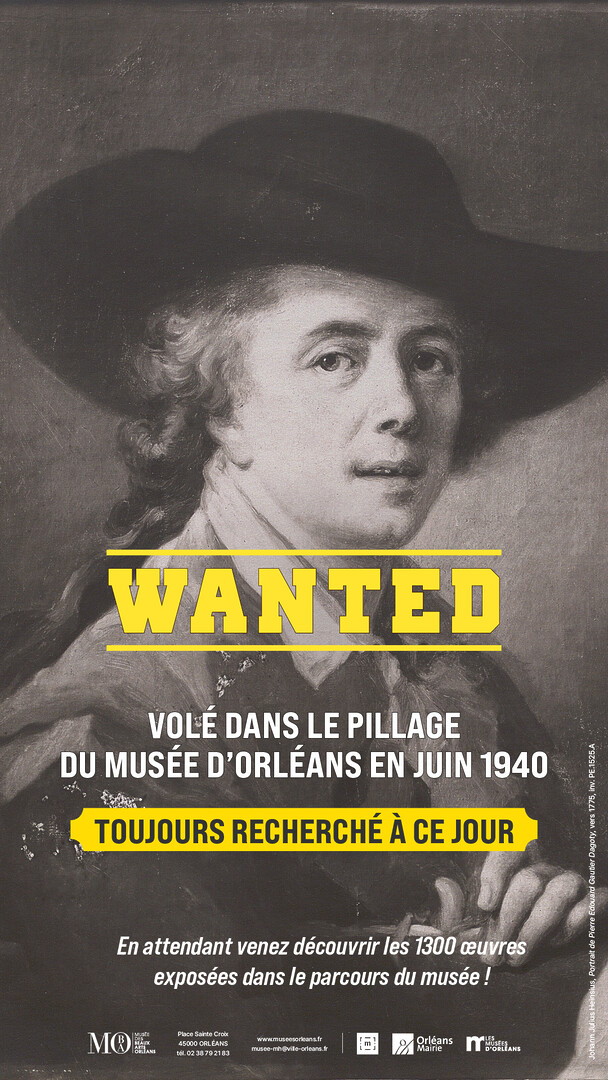
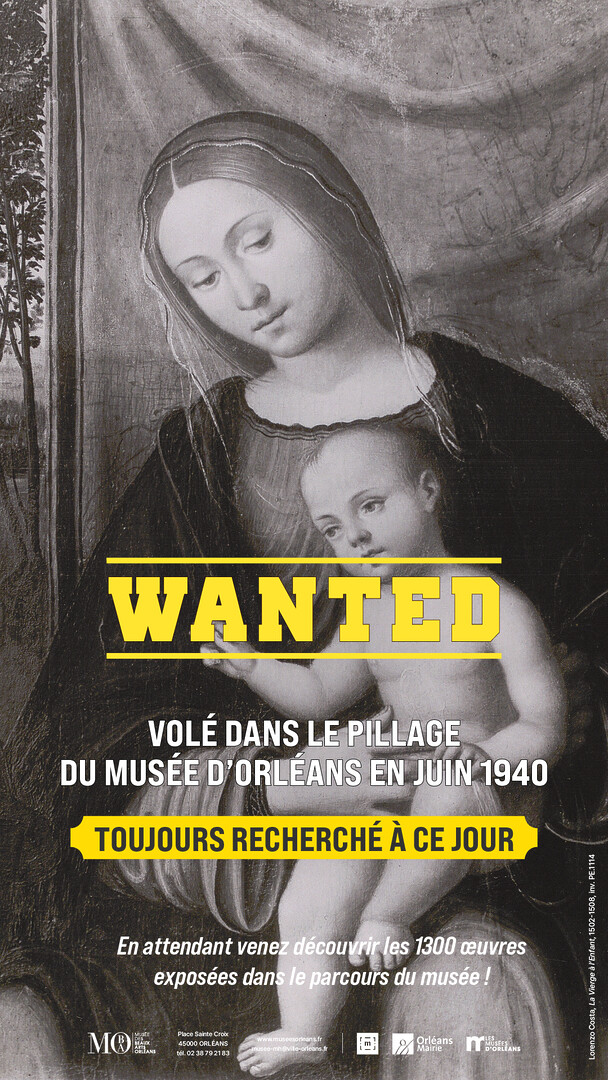
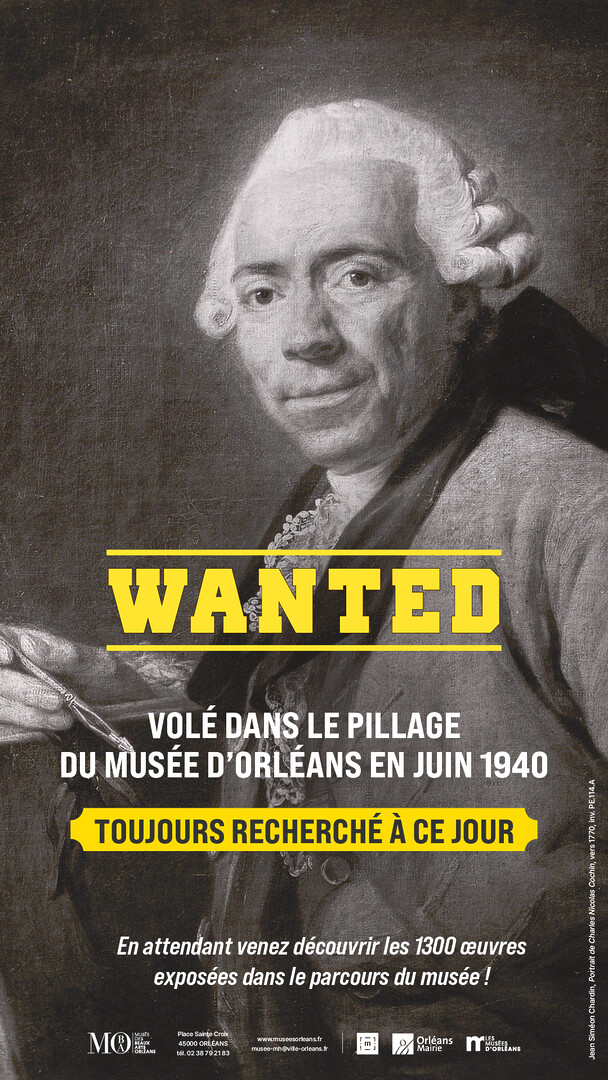
Wanted: Missing Paintings from the MBAO
Museum collections are inalienable and not subject to any statute of limitations,
which means we must continue to search tirelessly for missing works.
On November 4, 1825, the Musée d’Orléans opened its doors in the Hôtel des Créneaux. Twenty-one years after the closure of the first “museum”—which, as early as 1799, had housed revolutionary confiscations—and roughly the same amount of time after the opening of other museums across the country thanks to the Chaptal Decree, the Orléans museum began its existence with a distinctive feature: while the fifteen “Chaptal museums” owed their collections to items sent by the state, the museum’s director had chosen to rely on donations to build the collection—with a success he had likely never dared to imagine. The mobilization of local art lovers—from major landowners to the most modest collectors—would give this museum, conceived and built by the residents themselves, a distinctive character, reflecting their tastes and serving as a lasting reminder of the region’s artistic history. What each person had inherited from this Orléans of the Enlightenment, and what the art market had provided over decades, became part of the public collections. The astute Count de Bizemont, the driving force behind this admirable undertaking, took care to publish weekly—for years—in the *Journal du Loiret* the donations received from each contributor, providing a faithful chronicle that allowed readers to follow the collection’s development step by step. The catalogs of the collections, which he soon began to publish and which his successors would continue, took over from there. There is no shortage of sources for tracing the origins and development of this collection.
This generosity has not waned and has continued to support the Museum’s acquisition policy; the expansion and diversification of its collection have led to the opening of branch locations, first the Hôtel Cabu for the historical, archaeological, and art collections, then the Jeanne d’Arc Museum, and finally the Painting Museum Annex—the Paul Fourché Museum—which opened in 1907 with the donation of the collection by this art lover who wished to link his name to the city on the Loire.
Of these more than three hundred paintings, none survived the looting of the museum in June 1940 before it was set on fire, just like the Hôtel Cabu and the Jeanne d’Arc Museum. Others would disappear under similar circumstances while they were being stored in government offices, in accordance with a common practice prior to the 2002 Museums Act, but sometimes also well before or well after the war.
To make it easier for everyone to identify these works and to facilitate their return to the museums to which they were donated, this list compiles all of the paintings that are currently missing but were previously listed in inventories and catalogs. Each entry compiles all references found in catalogs, archives, and various notes, in order to make each description as comprehensive as possible.
Thanks to this meticulous work, four works have been restored over the past two years.
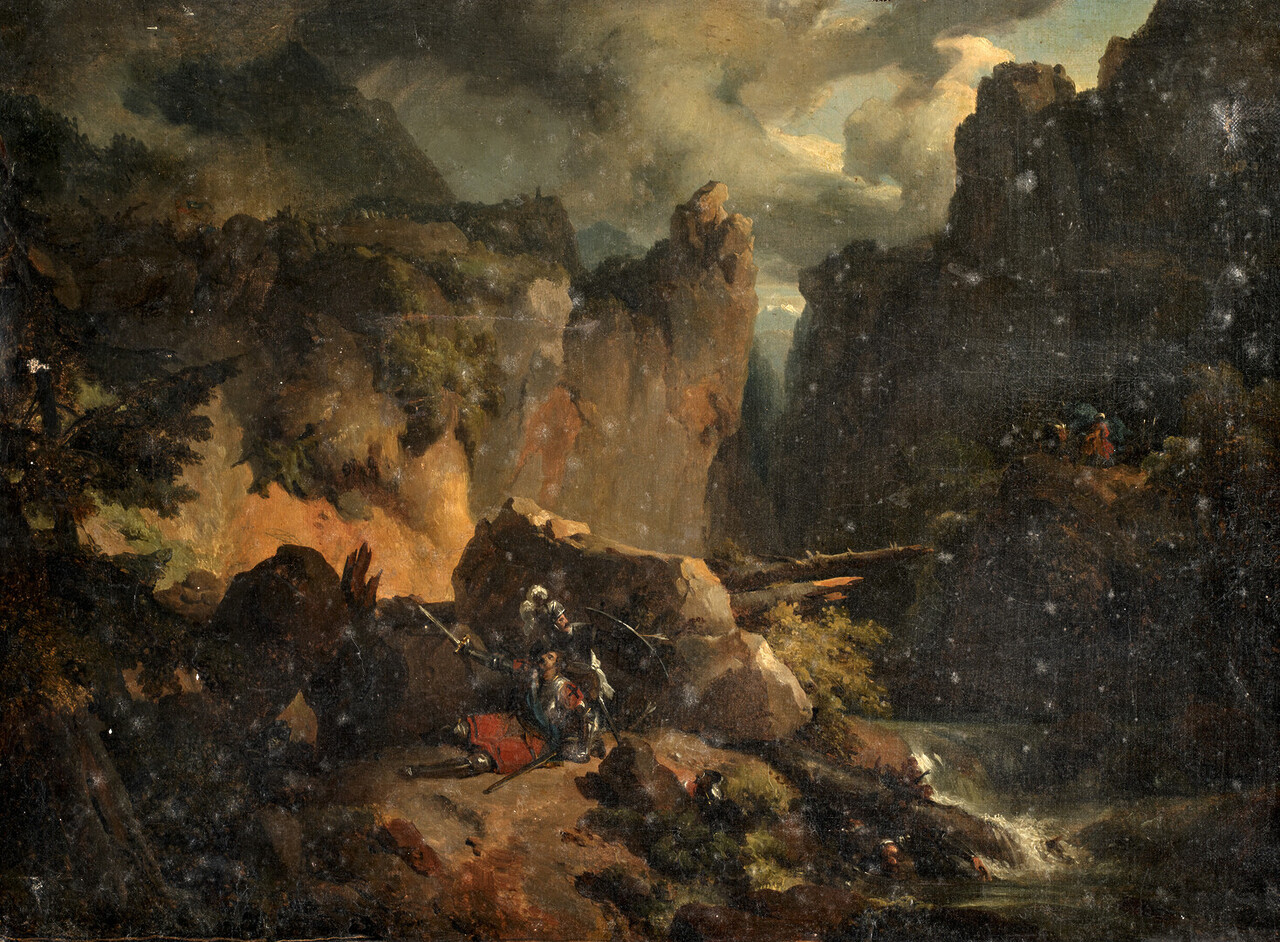
This sketch, which entered the collection in 1892 as part of the studio collection and Léon Cogniet’s collection, had been missing since the mid-20the century. It was voluntarily returned in 2026 by a German couple who had acquired it on the German art market in the 1980s. The labels and inscriptions on the reverse allowed them to identify its origin and understand the importance of returning it to its original museum. The painting will be restored thanks to the expertise-based sponsorship of the Arcanes studio.
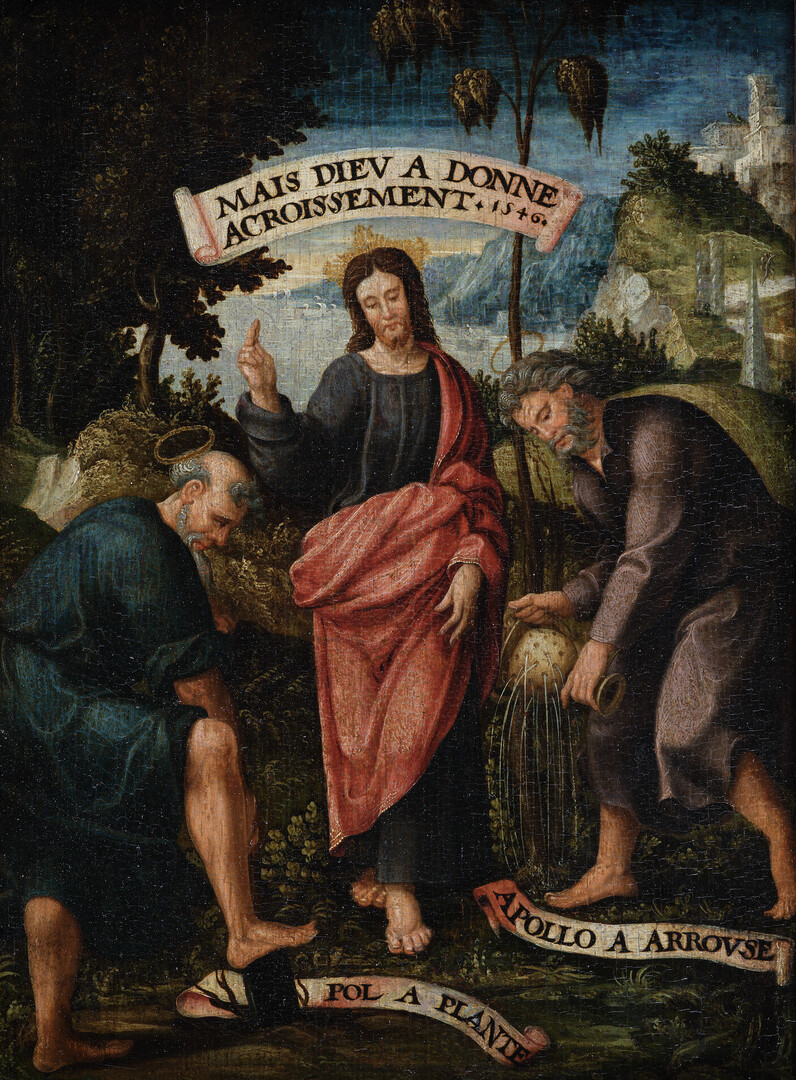
This painting, which had disappeared before 1923, reappeared on the market in 1994 and was acquired by the Beauvais Museum. Eric Moinet, director of the Orléans Museum, had identified the painting commissioned for the cathedral based on the description in the 1876 catalog, though its return was not possible at that time. Thirty years later, the Beauvais Museum agreed to return it, and it was able to rejoin the Orléans collections.
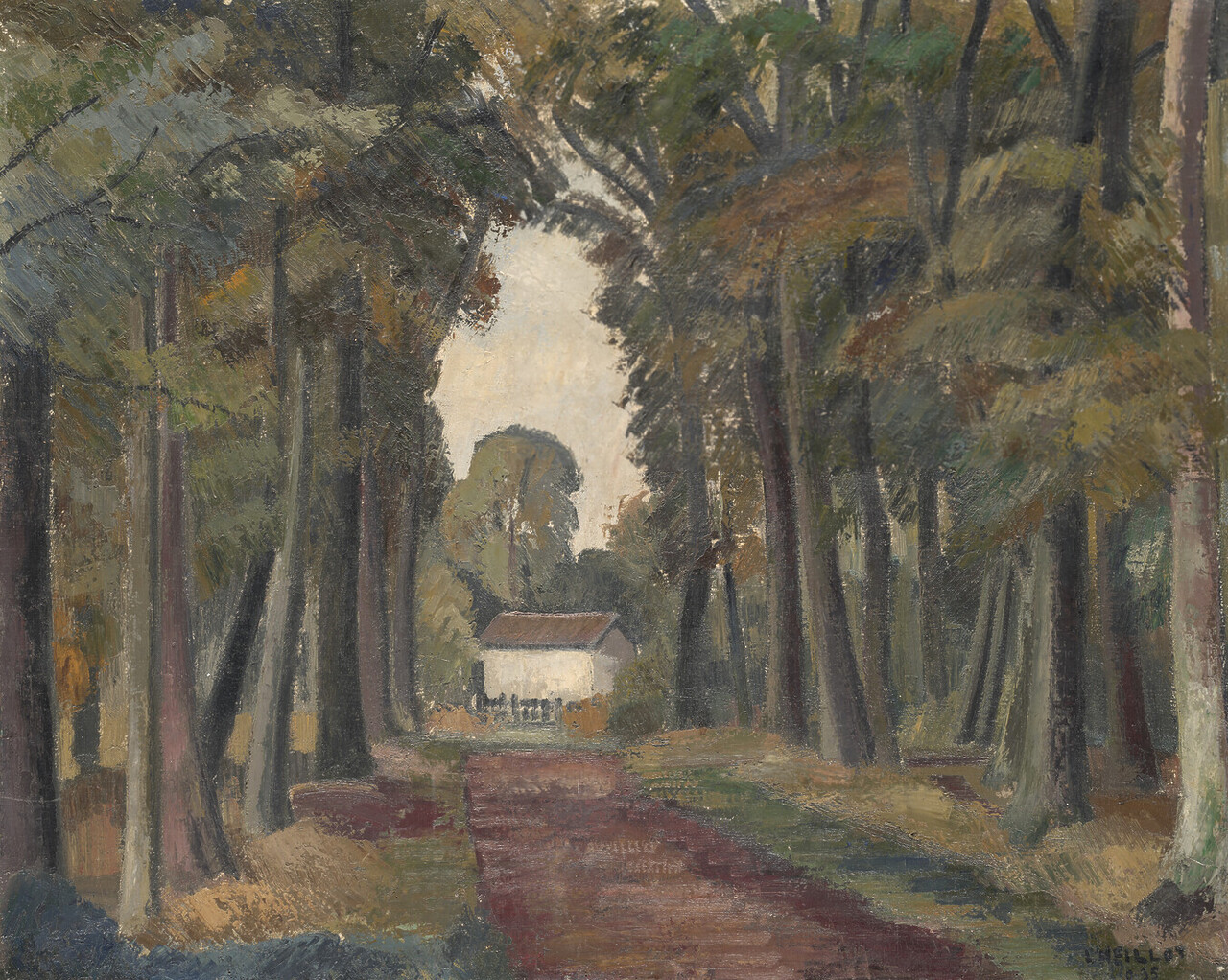
This landscape painting had been acquired by Jean Zay’s administration during the Popular Front and stored in Orléans, where it was displayed in an office and disappeared in the 1970s. Thanks to the keen insight of Attorney Matthieu Semont, it was tracked down at an auction and returned to the museum in 2024.
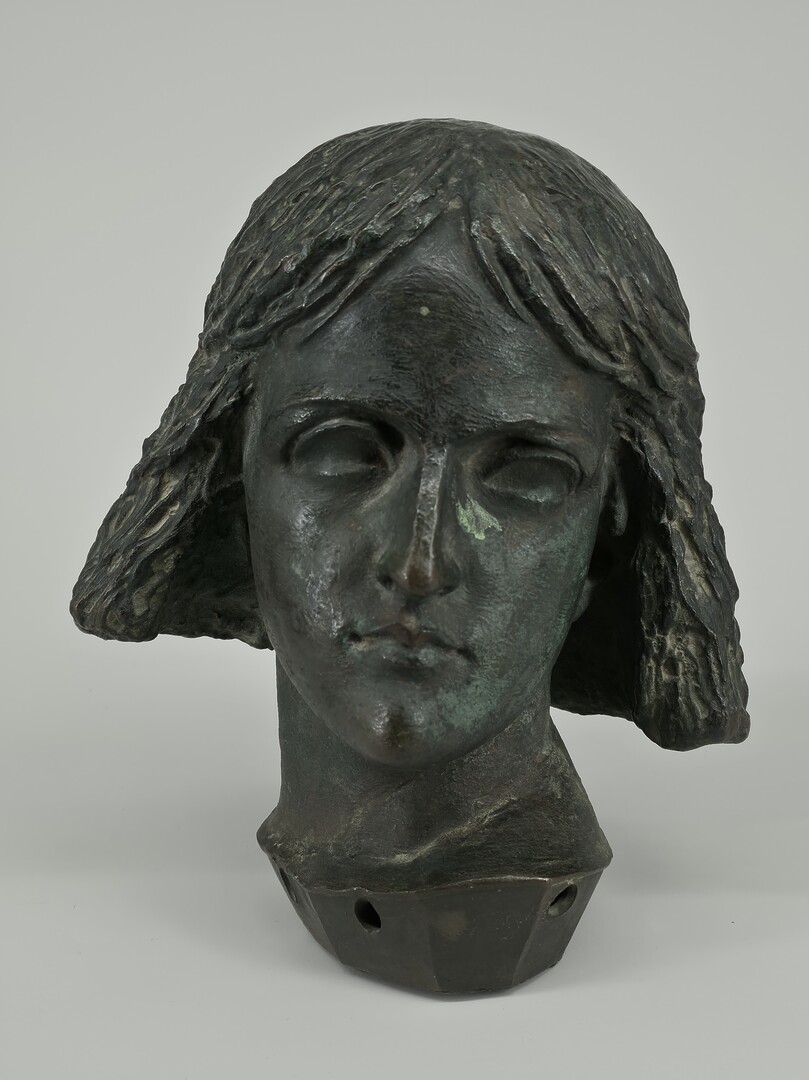
This sculpture, unveiled in 1899 in the archbishop’s garden, was reduced to ruins in 1944. The head, salvaged by “a patriot,” was bequeathed to the museum in 2023 to be reunited with the rest of the fragments.
To date, 424 paintings are still missing,
and with everyone’s vigilance, they will one day find their way back to the museum
to which they were donated for everyone to enjoy.